Speakers Information
WELLINGTON
- Before moving to New Zealand in May 2005, Driden Kunaka spent his last three years in Zimbabwe working for the Movement for Democratic Change. The MDC is the opposition party which just won the elections in Zimbabwe but will have to face a run-off imposed by Mugabe’s governing party. In 2006, Driden was appointed as the party’s representative to New Zealand, acting to provide information on developments in Zimbabwe. He worked with other Zimbabweans in New Zealand to form a New Zealand Chapter of the Save Zimbabwe Campaign, and is currently the Chapter’s Wellington Region Interim Chairperson. Driden is optimistic that one day soon, the people of Zimbabwe will enjoy freedom.
- Farai Mbira was born in Zimbabwe and, having experienced Robert Mugabe’s dictatorship, he immigrated with his family to New Zealand in 2002. He enjoys study and is working on his PhD at Auckland University of Technology. Farai is a very active member of the Zimbabwean community where he has helped in many projects. He is married to Spiwe and they have four children.
- Moana Jackson is a lawyer of Ngati Kahungunu and Ngati Porou descent who co-founded the Maori Legal Service in 1987. He is an activist and spokesperson for the legal team defending the “Urewera 16”. He has also worked extensively overseas on international indigenous issues: he was a counsel for the Bougainville Interim Government during the Bougainville peace process; a judge on the International Tribunal of Indigenous Rights in Hawaii in 1993 and again in Canada in 1995. More recently, he took part in the drafting of the United Nations Declaration on the Rights of Indigenous Peoples.
- Lisa French Blaker is an intensive care nurse and humanitarian worker. Over the last ten years she has worked in developing countries and those still in conflict: Tanzania, Sri Lanka, central and western Sudan, and Iraq. In 2005-06, she spent nine months in Darfur, Western Sudan, working with local communities displaced by the war. Médecins Sans Frontières provided emergency medical care and ongoing support to victims of the fighting. Lisa’s recent book Heart of Darfur shares her experiences of Darfur, the hardship and pain as well as the hope and successes.
- Jorge Herrera has been an alternative community radio broadcaster for about 30 years. His focus is on Latin American politics and culture. He has worked as a high school teacher in social studies in San Francisco. He has a regular programme on Access Radio— ¡Oye Latino!—broadcast on Thursdays from 6 to 7:30 pm and showcasing the issues, culture and music of Latin America. You can hear it on 783AM or find out more on www.accessradio.org.nz
- Maher Mughrabi is a Scottish-Palestinian journalist and writer with more than 12 years’ experience on newsdesks in Britain (including The Independent and The Scotsman), in the Middle East and Australia. He currently works as Foreign Desk News Editor for The Age in Melbourne. His work for The Age has dealt with Western perceptions of Islam, the Israeli-Palestinian conflict and the war in Iraq, including an exclusive interview with the son of one of the two Iraqi men who were kidnapped with Australia’s Douglas Wood and later murdered. He has also written on politics in India, Pakistan and Britain. Mughrabi has also lectured on the history of the Israeli-Palestinian conflict, the history of Zionism and on Middle Eastern affairs, issues of Muslims and migration.
- Pauline Horrill is a medical practitioner who worked with the French Section of Médecins Sans Frontières from 1998 until 2006. From 1998 until 2003 she held field positions ranging from field medical practitioner to emergency co-ordinator in Sri Lanka, Yemen, Iran, Afghanistan, Ethiopia, Sudan (both in the North and in Darfur in the South), Republic of Congo, Sierra Leone, Ivory Coast, Angola. At the end of 2003, she became a programme manager based in MSF’s Paris headquarters, responsible for operations management in MSF projects in Sudan, Chad and Iran. Pauline is currently back in general practice in Wellington.
- Andrew Little is the national secretary of the Engineering, Printing and Manufacturing Union (EPMU). He started working for the union as a lawyer and has been actively involved in the labour movement for most of his working life. The EPMU represents 50,000 New Zealand workers. The EPMU’s support of the film Maquilapolis: City of Factories is particularly relevant as more than 300 EPMU members at Fisher and Paykel have recently been told they are to lose their jobs as the company is moving its production to Mexico.
- John Kerr is an organiser for the Engineering, Printing and Manufacturing Union (EPMU) and has been involved in the labour movement since arriving in New Zealand in 1994. The EPMU represents 50,000 New Zealand workers. The EPMU’s support of the film Maquilapolis: City of Factories is particularly relevant as more than 300 EPMU members at Fisher and Paykel have recently been told they are to lose their jobs as the company is moving its production to Mexico.
- Alexander Maxwell is a historian specialising in nationalism, in particular cultural and linguistic nationalism in Eastern Europe. He has lived and studied in Germany, Slovakia, Hungary, Romania, Wales and the Czech Republic. He has been teaching at Victoria University since 2007.
- Marianne Elliott is a human rights lawyer originally from Tokoroa who has worked in Palestine, East Timor and Afghanistan as well as with the New Zealand Human Rights Commission in Wellington. From December 2005 until December 2007 Marianne lived and worked in Afghanistan. Starting out with a consortium of human rights NGOs, she went on to work as a Human Rights Officer with the United Nations Assistance Mission to Afghanistan. She worked mostly in partnership with the Afghan Independent Human Rights Commission on a diverse range of human rights issues including freedom of expression. Initially based in Kabul, she also lived and worked in Herat (in Western Afghanistan) and Chegcharan (in the Hindu Kush). Marianne returned to Wellington in January 2008 to study.
- Rae Julian, who recently retired, spent the past 6 years as Executive Director of the Council for International Development, the umbrella body for 92 non-governmental organisations that work internationally. Previously, she spent four years managing a small project fund in the Pacific and also lived for 5 years in Cambodia, contributing to Volunteer Services Abroad and the United Nations. Five years as a New Zealand Human Rights Commissioner followed ten years with the Labour Research Unit in Parliament, and time spent as a researcher and a secondary school teacher. Rae’s links to Northern Thailand are mainly through her daughter, who has spent the last 13 years on the border with Burma, working with Burmese refugees, many of whom co-exist with their Thai Hill Tribe counterparts.
- Peter Marra is an aspiring New Zealand film-maker and co-founder of the Giving Voice Trust. His first feature film, Emails from East Timor, was broadcast on Maori Television and screened at the New Zealand International Film Festival 2002 and the historic East Timor Human Rights Film Festival 2002. In 2003, he co-organised the New Zealand festival Docomania, showcasing rare and quality documentaries from around the Pacific Rim with an environmental and human rights themes. He then began collaboration with the Centro Audio Visual Max Stahl Timor Leste to document important developments in the life of a child within the world’s newest and Asia’s poorest nation. In 2006, he returned to find out what happened to the family and the child’s school, during and after tumultuous events seen in his latest feature, Children of a Nation.
- Michael Smith has been Director of Caritas Aotearoa New Zealand for the last 3.5 years, following 10 years with the Red Cross and other non-governmental organisations. Caritas has had a long association with Timor Leste, both during its road to independence, and in post-independence nation-building. Caritas supports community development projects working in sustainable livelihoods and health areas in various parts of the country, and helped in response to the 2006 and 2007 violent outbreaks.
- Martin de Jong is Communications and International Advocacy Co-ordinator for Caritas Aotearoa New Zealand. He prepared a comprehensive backgrounder on East Timor prior to the 1999 referendum that led to East Timor’s independence. Caritas has had a long association with Timor Leste, both on its road to independence, and in post-independence nation-building. Caritas supports community development projects working in sustainable livelihoods and health areas in various parts of the country, and helped in response to the 2006 and 2007 violent outbreaks.
- David Close was a teacher for many years. A highlight of his career was six years’ teaching in Tanzania shortly after the country became independent in the 1960s. David was also a Christchurch City Councillor for 24 years. He is currently Deputy-Chair of the Canterbury Community Trust. He accepted an invitation to become a founding trustee of the Hamlin Trust (NZ) because of his deep interest in the challenges faced by African countries. The Hamlin Charitable Fistula Hospitals Trust was established in New Zealand in 2005, one of a number of similar trusts in different countries. Catherine and Reginald Hamlin started work in the hospital in Addis Ababa, Ethiopia in 1959— language was a difficulty, blood was scarcer than gold, and there were many more obstetric problems than they had ever encountered. Particularly troublesome was the prevalence of obstetric fistula. Power failures were a hazard, and some operations had to be finished in torchlight. Nevertheless, their hard work prevailed and as a result, hospitals and programmes were established, and the lives of thousands of outcast women have been restored over the last 49 years. Dr Catherine Hamlin wrote The Hospital by the River: A Story of Hope, a book about her incredible mission in Ethiopia.
- Marnie Lloyd is a Delegate with the International Committee of the Red Cross. She spent close to 18 months in DR Congo, from November 2006 to April 2008, working largely with victims of sexual violence.
- Dr Roderic Alley is a retired Professor of Politics with a long-standing interest in human rights—an area in which he has a published record, particularly concerning human rights in conflict situations. Currently he is on the Board of a new Wellington-based initiative entitled Building Human Rights Communities in Education and designed to foster the practice and study of human rights in New Zealand schools.
- Gordon Campbell is the Scoop website’s political editor for its election coverage this year, and was a former staff writer with the Listener magazine. Since 2003, he has written extensively about our immigration and security laws, and is currently concerned about the carrying over of many of the human rights injustices of the Ahmed Zaoui case into the Immigration Bill that is currently before Parliament.
- Shamim Homayun is a Hawaii-born Afghan, who has recently been working with ChangeMakers Refugee Forum. He has also been involved in the Afghan and Muslim communities in Wellington. He studied politics and tutored in religious studies at Victoria University, and spends a lot of time painting.
The Human Rights Network
 A meeting place for New Zealanders with an interest and commitment to human rights.
Through the Network you can:
• Access information on human rights in New Zealand or internationally
• Discuss issues from a human rights perspective
• Propose and collaborate on human rights projects
• Share information about events, links, news, and other human rights developments
• Join or form human rights communities and discussion forums of interest
Membership of the Human Rights Network is free. Visit www.humanrights.net.nz for more informaton.
Or contact us at: or PO Box 24 423, Manners St, Wellington.
HUMAN RIGHTS FILM NETWORK
 The Human Rights Network Trust of Aotearoa New Zealand is a member of the Human Rights Film Network. The HRFN is an international partnership of human rights film festivals around the world. The HRFN was formed in 2004 and exists to promote human rights films through festivals like ours, promote and support new and established festivals, and foster a supportive environment for human rights film makers.
People’s Choice Award
HAVE YOUR SAY!
We are very pleased to introduce our first ever People’s Choice Award. All ten feature films screening this year are eligible, and we want the world to know what Kiwi’s think. Be sure to pick up a ballot along with our survey form available after each screening and cast your vote!
Venue Information
 WELLINGTON
The Paramount, 25 Courtenay Place
Tickets can be purchased by phoning the theatre on (04) 384 4080, or by faxing (04) 384 4408. Disabled access available for all sessions. Street parking available with additional parking in the Tory Street Carpark. Please visit www.paramount.co.nz or contact the theatre directly for further details and booking information.
 AUCKLAND
Rialto Newmarket, 167-169 Broadway
Tickets can be purchased online via www.rialto.co.nz or by phoning the cinema on (09) 369 2417. Disabled access available for all sessions. Disabled Carpark spaces are located on Osborne Street. General parking is available at the Tournament Carpark, entrance on Kent Street. Rialto customers will receive 2 hours free parking with a valid movie ticket – charges will incur after the initial two-hour period.
 CHRISTCHURCH
Regent on Worcester, 94 Worcester St
Tickets can be purchased by phoning the theatre on (03) 366 0140. Disabled access available for all sessions. Parking is available at the Farmers Carpark, Oxford Terrace. Alternative parking is available at the Rydges Hotel opposite the Regent. Please visit www.regentcinemas.co.nz or contact the theatre directly for further details and booking information.
DUNEDIN
Rialto Dunedin, 11 Moray Place
Tickets can be purchased online via www.rialto.co.nz or by visiting the cinema on Moray Place. Disabled access available for all sessions. Parking is available at the YMCA Carpark only 100 metres away. Please visit www.rialto.co.nz or contact the theatre directly for further details and booking information.
Shorts
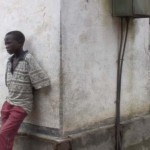 |
Bowling For Zimbabwe - The film follows the extraordinary lives of those enduring the current crises in Zimbabwe. For Itai a cricketing scholarship may be his only chance at a life beyond mere survival. He must play to win. |
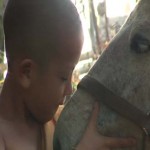 |
Children Of The Golden Horse - Ten-year old Jattae is a so called “Hilltriber“, one of over 100,000 members of ethnic minorities who are currently settled in the mountains of North Thailand. Like most of these people, Jattae’s family is living close to the subsistence level. |
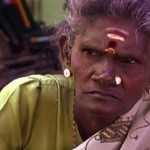 |
Now We are Fearless - This moving documentary shows how untouchable and tribal South Indian women use collective action to successfully fight injustice and discrimination, and how their lives were changed by community development led by the Women’s Development Resource Centre. |
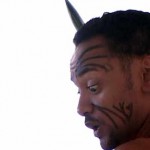 |
Indigenous Peoples And The United Nations: Volume 1 - A thirty-minute long documentary, to promote and raise-awareness on indigenous issues within the UN system to politicians and diplomats. |
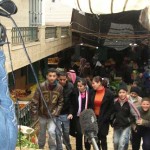 |
Forbidden Rights - This short film looks at young people growing up in Palestine and covers their thoughts and feelings on subjects such as curfews, hobbies, punishments, and education. |
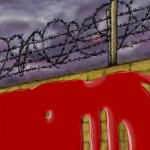 |
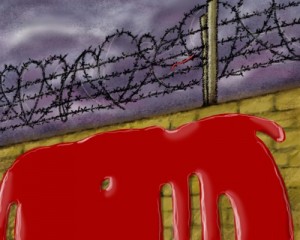
Mother and Wall - In this film, the wall is a metaphor for inhuman actions, infringement of freedom and the segregation of people. |
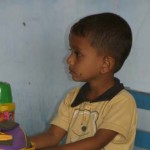 |
Wars and Waves: Sri Lanka’s Internally Displaced - In Sri Lanka, a natural disaster and ongoing conflict have displaced hundreds of thousands of people. |
Features
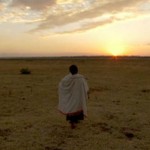 |
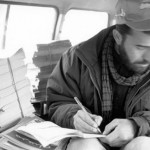
A Walk to Beautiful - The award winning feature-length documentary A Walk to Beautiful tells the stories of five Ethiopian women who suffer from devastating childbirth injuries and embark on a journey to reclaim their lost dignity. |
 |
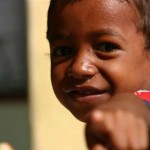
Afghan Chronicles - Since the fall of the Taliban, Afghanistan has been rebuilding itself and reviving democracy, and there is some freedom of expression. With its radio station and two magazines, one of them aimed at women, the press agency Killid Media is a real media phenomenon. |
 |
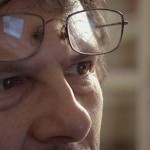
Children of a Nation - Set amongst the chaos of youth gang fighting in 2006 that has turned tens of thousands of East Timorese families into IDPs (internally displaces people), an inspired East Timorese teacher develops a vision for the children in her school. |
 |
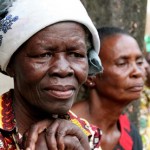
The Dictator Hunter - For seven years, Reed Brody has been chasing one former dictator in particular: Hissene Habré, the former leader of Chad, who is charged with killing thousands of his own countrymen in the 1980s. |
 |
Fighting The Silence: Sexual Violence Against Women In Congo - During the Democratic Republic of the Congo’s seven year war, more then 80,000 women and girls were raped. Fighting the Silence tells the story of ordinary women and men struggling to change their society: one that prefers to blame victims rather than prosecute rapists. |
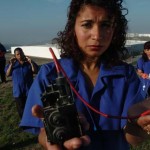 |
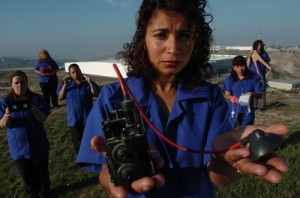
Maquilapolis: City Of Factories - Carmen works the graveyard shift in one of Tijuana’s maquiladoras, the multinationally-owned factories that came to Mexico for its cheap labour. After making television components all night, Carmen comes home to a shack she built out of recycled garage doors, in a neighborhood with no sewage lines or electricity. |
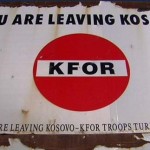 |
A Minority Report: Kosovo Minorities Eight Years After - In June 1999, following the end of the three-months lasting NATO military campaign against Yugoslavia, the United Nations Mission in Kosovo (UNMIK) was established. UNMIK was the first peace-building operation ever based on the idea of an UN administration fully governing a post-conflict territory. |
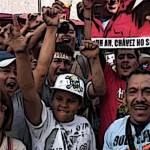 |
Now The People Have Awoken: Exploring Venezuela’s Revolution - Venezuela has been in Washington’s enemy list in recent years. It also sits atop the biggest oil reserves in the world and claims to promote a new socialism. What makes Venezuela tick? |
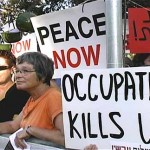 |
Occupation 101: Voices Of The Silenced Majority - A thought-provoking and powerful documentary film on the current and historical root causes of the Israeli-Palestinian conflict. Unlike any other film ever produced on the conflict. |
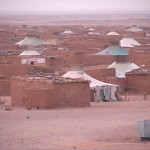 |
Western Sahara: Africa’s Last Colony - Shot over two years, the film follows the story of Amma Didi and her family as they prepare to be reunited with the daughter she was forced to leave behind 30 years ago when she fled the Moroccan occupation of her homeland. |
All Human Beings Are Born Free And Equal
PRIZE-WINNING SHORT FILMS ON TOUR IN NEW ZEALAND
The Universal Declaration of Human Rights was proclaimed by the General Assembly of the United Nations on 10th December 1948. It was the international community’s answer to the atrocities of the Nazi regime and the violence experienced in World War II.
What is the situation regarding freedom and equality in dignity and rights 60 years later?
The Goethe-Institut in cooperation with the Foundation Remembrance Responsibility and Future invited young fillmmakers in ten countries to give their interpretation of the famous First Article of the Universal Declaration of Human Rights* in a short film with a maximum length of 20 minutes.
292 films were submitted by students from film academies and colleges of art from ten countries (Germany, Estonia, Israel, Latvia, Lithuania, Poland, Russia, the Czech Republic, the Ukraine and the USA). The jury selected 26 films for awards featuring a wide variety of subjects and approaches. The Goethe-Institut New Zealand is proud to present the winning films on the occasion of the “Human Rights Film Festival” in May. Come and see the results of these innovative and high quality projects in Wellington, Auckland, Christchurch and Dunedin!
*“All human beings are born free and equal in dignity and rights. They are endowed with reason and conscience and should act towards one another in a spirit of brotherhood.”
www.goethe.de/nz
www.goethe.de/kue/flm/prj/men/enindex.htm
SCREENING DATES & PLACES (entry by koha)
Rating: M - Adult Themes
WELLINGTON
The Film Archive • Cnr Taranaki & Ghuznee Streets • www.filmarchive.org.nz
Thursday 1 May
7.00pm (Programme 1)
Friday 2 May
7.00pm (Programme 2)
Saturday 3 May
5.30pm (Programme 1), 7.00pm (Programme 2)
AUCKLAND
Galatos • 17 Galatos Street • www.galatos.co.nz
Monday 12 May
7.00pm (Programme 1)
Tuesday 13 May
7.00pm (Programme 2)
CHRISTCHURCH
Christchurch Art Gallery - Te Puna O Waiwhetu • Worcester Blvd • www.christchurchartgallery.org.nz
Saturday 17 May
10.00am – 12.00pm, 1.00pm – 3.00pm
Sunday 18 May
10.00am – 12.00pm, 1.00pm – 3.00pm
DUNEDIN
Public Art Gallery • 30 The Octagon • www.dunedin.art.museum
Saturday 24 May
10.00am – 4.00pm
Sunday 25 May
10.00am – 4.00pm
Dunedin Schedule
Christchurch Schedule
Wellington Schedule
Auckland Schedule
Contact
Human Rights Film Festival Aotearoa New Zealand
PO Box 24423
Manners Street
Wellington 6142
New Zealand
Email:
Media Inquiries
For a media pack, images or more information please contact Human Rights Film Festival Publicist Brianne Kerr on 021 165 5784 or
Directors’ Statement
 CELEBRATING THE 60TH ANNIVERSARY OF THE UNIVERSAL DECLARATION OF HUMAN RIGHTS
“People were coming out of the bush and they had shelter from the sun, wind and howling dust storms. And they had food. We had food. It was a small success but we had done it. And so I learned my first lesson in the power of determination: push, request, demand, and fight until you get what you want and what the people need. And never give up.”
Lisa French Blaker “Heart of Darfur: Hope and humanity in the world’s worst war zone”
In the year that we celebrate the 60th anniversary of the signing of the Universal Declaration of Human Rights (UDHR), it seems hard to ignore the truisms in these observations. The path to realising the promise of the UDHR is neither an easy nor easily navigable journey. But it is ultimately a rewarding one.
It is ironic that the 60th anniversary is also the year in which the Olympic games (an event that celebrates the strength of the human spirit) are held in China; a country which is widely condemned for its human rights abuses. 2008 provides us with the perfect opportunity to reflect on the 60 years since the signing and consider what progress the world has made towards realising those ideals. It is appropriate that we ask whether New Zealand as a society continues to uphold human rights or understand what human rights mean when the right to compete comes before the right to live in freedom.
In partnership with the Goethe-Institut we are proud to bring you All Human Beings Are Born Free and Equal. An exhibition of short films, from young filmmakers who entered the Goethe competition to succinctly represent what Human Rights meant to them in the 21st Century. Over 292 entries were received and 26 films were selected for inclusion in the exhibition.
In many ways this film programme emphasises the point that human rights are universal and enduring. The concerns of today are no different to those of 60 years ago or those in 20 years time. The nature or essence of those rights will remain the inherent dignity and worth of the person. Concerns over the environment, globalisation, accountability of political leaders, privatisation of utilities and privacy dominate for now. However, the right to freedom of expression, the right not to be discriminated against, the right to life and the right to safe working conditions have just as much cogency today as they did in 1948. Despite all the advances that society has made in the past 60 years it is evident that realisation of basic human rights is an ongoing commitment. Society must be vigilant to ensure that all members of the community are free to realise their rights - not just those that the media or politicians deem worthy recipients.
This year our programme pays homage to those communities who stand up to be counted and work for what they believe in. Now We Are Fearless and Now the People Have Awoken provide a message of hope and inspiration as they show how communities who band together can affect change for the better. This does not mean that the journey is necessarily a smooth one. Afghan Chronicles is a powerful story of how society can change for the better, despite the ongoing conflict. But at the same time, there is a stark reminder that those successes can be seen as a threat to cultural traditions.
The Global community is celebrated too as the power of cooperation, be it through the help of an individual aid as seen in Children of a Nation and A Walk to Beautiful, or institutional aid as seen in The Dictator Hunter, effects change for the better.
Although the festival this year is a celebration of human rights, we cannot/should not shy away from presenting films that show we still have a long way to go or it may be difficult to see the light at the end of the tunnel. Western Sahara, Africa’s Last Colony, for example gives voice to Sahrawis who have spent much of their lives fighting for an independent homeland. They have formed their own democratic Government in the refugee camps but for over 30 years have been denied the right to self rule in their own country. The speakers panels after each film, however, are there to help make sense of what has been shown and provide insightful discussion of the issues.
In coming to see these films we hope that you share in the dream that began with a meeting in Paris 60 years ago - a dream that all human beings are born free and equal in dignity and rights. A dream that will become a reality and people need never give up.
Boris van Beusekom and Carolyn Brown
Sponsors
 |
 |
 |
Partners
 |
 |
|
|
|
|
|
 |
 |
|


Associates
 |
 |
 |
 |
 |
 |
Supporters
| U.N.A.N.Z. | TRADE AID |
| LION NATHAN | THE HUMANIST SOCIETY OF N.Z. |
| OXFAM NEW ZEALAND | TWO PADDOCKS |
| NGA WAKA VINEYARD |
Schedules/Prices
LOCATION & DATES |
TICKET PRICES |
| Wellington 8-16 May |
Opening Night: $20.00 (inc drinks and nibbles) Adults: $14.00, Concessions $12.00 |
| Auckland 15-22 May |
Opening Night: $20.00 (inc drinks and nibbles) Adults: $15.50, Concessions $11.00 |
| Christchurch 22-30 May |
Opening Night: $20.00 (inc drinks and nibbles) Adults: $14.00, Concessions $11.00 |
| Dunedin 22-30 May |
Opening Night: $20.00 (inc drinks and nibbles) Adults: $14.50, Concessions $10.00 |
The Films
Features
|
Shorts
|
TALKING ABOUT THE ISSUES
The Human Rights Film Festival provides a safe space to explore and debate national and international human rights issues. To assist this, we have organised after each screening a discussion forum examining issues raised by the films. Audience members are encouraged to listen to and join in the discussion.
Various non-governmental organisations work in the area of human rights in New Zealand, most of them members of the Human Rights Network. If you are interested in learning more about some of the issues raised in our films, or in finding out more about the work these organisations are involved in, information about them is available in the theatre foyers after each screening.
About
THE FESTIVAL TEAM
Directors: Boris van Beusekom and Carolyn Brown
National Coordinator: Frank Giovinazzo
Programme Selection: Boris van Beusekom; Carolyn Brown; Frank Giovinazzo
Design: Y&R
Publicity: Brianne Kerr
Financial Adviser: Gerry Westhuis
Regional Coordinators: Ivette Salame (Auckland); Cathy Blakely, Antonia Kokalova-Gray and Gill Bailey (Wellington); Carolyn Brown (Christchurch); Barbara Frame (Dunedin)
Website Host: Orcon
Printing: The Print Room
We would also like to thank the following organisations and individuals for their advice, support, and contribution to the success of the festival: Kerry Newton & Bjorn, Franz, and Lars van Beusekom; Carol Nelson; Peter Crowther; the members of the Auckland Regional Committee; members of the Dunedin Regional Committee; Sally Jackman; the Ministry of Justice; Joan MacDonald; Justin Kemp; Steve Green; Louise Heremia; Merrill Simmons-Hansen; Leo Bouter; Christine Hofkens; Betty Mason; Lisa Mönchmeyer; Christoph Mücher; The Film Archive, Steve Russell and Erica Andersen; MIC and Galatos, Deborah Lawler-Dormer; Christchurch Art Gallery, Sarah Amazinnia and Cheryl Comfort; Dunedin Public Art Gallery, Lynda Cullen; Helen Smith; Gilbert Wong; Karolin Potter; members of the Wellington Regional Committee; Rosslyn Noonan; New Internationalist; members of the Christchurch Regional Committee; staff at the Paramount, Rialto Newmarket, Regent on Worcester, and Rialto Dunedin; CTV; Plains FM; The Peace Foundation; Amnesty International; Nadra Zarifeh; Bill Gosden; Antony Vallyon, and others.
2008 Dates
Wellington 8 - 16 May
Paramount Theatre
Auckland 15 - 23 May
Rialto Newmarket
Christchurch 22 - 30 May
Regent on Worcester
Dunedin 29 May - 6 June
Rialto Dunedin